
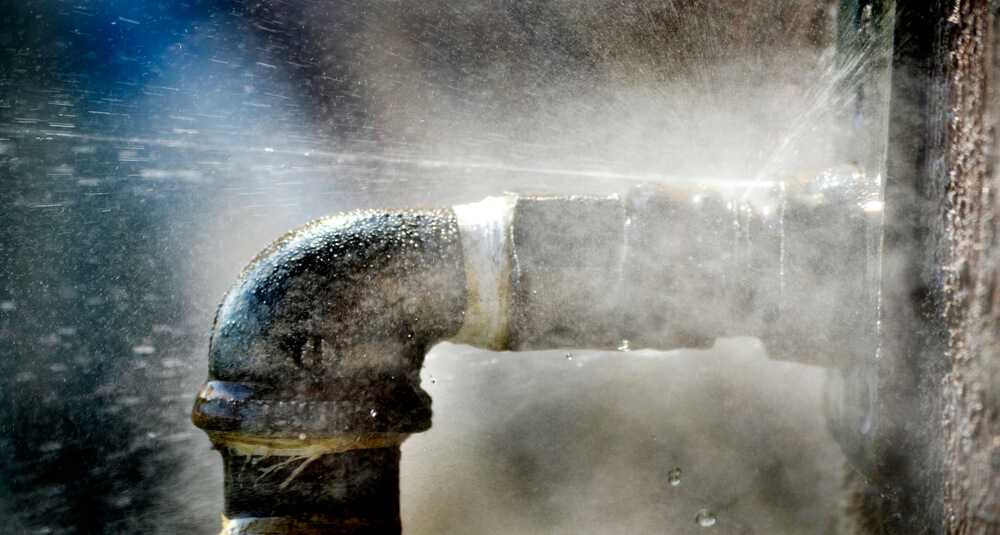

When a pipe bursts in your home, you need to shut off the water, drain the remaining water, manage the burst pipe cleanup, and call a licensed plumber.
Key Takeaways
- Know where your main water shut‑off valve and circuit breaker are located so you can act quickly when a pipe bursts.
- After stopping the water flow, drain taps and toilets to relieve pressure, remove standing water to prevent mold, and look for signs of hidden damage.
- Call a licensed plumber for professional burst pipe repair right away.
Burst pipes can happen during a hard freeze when a frozen pipe expands until it cracks, sending water everywhere. They can also result from corrosion or sudden pressure changes, but the remedy is the same: Act fast.
This guide explains what to do when a pipe bursts so you can limit the damage while you’re waiting for professional help.
6 Things To Do When a Pipe Bursts in Your Home
When water starts spilling, every minute counts. Acting quickly reduces damage, prevents mold growth, and keeps your home safe.
1. Shut Off Your Home’s Main Water Supply
When you notice that a pipe bursts, the first step is to stop more water from entering your plumbing system. Locate your home’s main shut‑off valve. You may be able to find it:
- Near the water meter
- In the basement
- In a crawl space
- Where the main water line enters the house
Shutting off the water supply immediately prevents additional flooding and buys you some time to address the problem. If you aren’t sure where the valve is, take a moment now to find it so you’re ready for an emergency.
2. Turn Off Electricity If Needed
If a burst pipe is leaking near outlets, light switches, appliances, extension cords, or your breaker panel, electricity becomes a serious hazard. Even a small amount of standing water can carry an electrical current and cause shock.
If it’s safe to do so, go to your home’s electrical panel and turn off the circuits that serve the affected area. This helps reduce the risk of electrical shock, short circuits, and fires caused by water getting into wiring or outlets.
That said, don’t touch the electrical panel if:
- You’re standing in water, or the floor within several feet of the electrical panel is wet
- There’s visible water pooling, dripping, or moisture on the wall or panel itself
- The only way to reach the panel requires stepping across wet flooring or reaching past pooled water
In these situations, it’s safer to shut off power to the entire house only if you can do so from a dry location. If that’s not possible, keep your distance and call a professional because your safety should always come first.
3. Drain the Remaining Water

Once the main water supply is shut off, the next step is to drain as much water as possible from the plumbing system. Start by opening all faucets in the house, beginning with the cold taps. If possible, work from the lowest level of the home upward so gravity can help pull water out of the lines.
Let the faucets run until the flow stops. Be sure to include fixtures that are often overlooked, such as tubs, showers, laundry sinks, outdoor spigots, and any basement or garage faucets. You should also flush toilets several times to clear water from the supply lines.
Draining the system relieves pressure inside the pipes, which reduces the chance of additional leaks or pipe bursts. This step is especially important if a frozen pipe caused the damage. Leaving faucets open gives melting ice and expanding water a safe exit point, helping pipes thaw more evenly and lowering the risk of further cracking.
Keep all faucets open until they stop dripping completely to protect the system while repairs are underway.
4. Contain and Remove Standing Water
Water left on floors, carpets, or inside walls can quickly soak into building materials and cause long-term problems, including mold growth, wood rot, and weakened drywall. That’s why it’s important to begin pipe burst cleanup as soon as it’s safe to do so.
Start by removing any standing water using towels, buckets, mops, or a wet/dry vacuum. The faster you eliminate pooled water, the more damage you can prevent.
Once visible water is removed, focus on drying the area. Open windows and doors if the weather allows, turn on fans, and run a dehumidifier to pull moisture from the air. These steps help slow mold growth and reduce lingering dampness that can spread behind walls or under flooring.
Move furniture, rugs, electronics, and personal items out of the affected space to protect them from water damage and to clear a safe path to the burst pipe. This early cleanup helps limit further damage and gives the plumber room to work efficiently.
If the water is dirty, contaminated, or involves sewage, stop immediately and wait for professionals to handle the cleanup safely.
5. Locate the Burst Pipe
Try to find the source of the leak. Sometimes the pipe is visible, and you can see water spraying from under a sink or in a basement. Other times, the damage is hidden behind walls or underground.
Clues that can help you locate a burst pipe include:
- Unusual banging or hissing noises
- Low water pressure in one or more fixtures
- Visible water stains or damp patches on walls or floors
- Frost on exposed pipes
If you notice any of these signs, mark the area or note which fixtures have lost pressure. This can help your plumber quickly pinpoint the source of the burst and make repairs faster.
6. Call a Licensed Plumber

Once you’ve stopped the water and electricity and contained the mess, call a licensed plumber. Attempting repairs yourself can lead to additional damage or code issues that are easy to overlook in the moment.
When you talk to the plumber, be ready to describe where the pipe burst and what you’ve done so far to mitigate damage. A plumber can properly assess the situation, repair or replace the damaged pipe, and offer guidance on how to reduce the risk of future pipe bursts.
When a Pipe Bursts, a Licensed Plumber Can Repair It Safely
When a pipe bursts, you need All Aboard Services. Our licensed technicians know how to find the source of the problem, fix it correctly the first time, and check for hidden issues that could cause future damage.
We offer dependable workmanship, clear communication, and warranties that back our repairs. If you’re dealing with an emergency or need expert leak repair in Northern Utah, All Aboard Services is ready to help protect your home today.