


How To Tell If a Breaker Is Bad
Knowing how to tell if a circuit breaker is bad can help you catch electrical problems early and keep your home safe before a small issue turns into a costly repair.
Key Takeaways
- Common signs of a bad breaker include frequent tripping, burning smells, scorch marks, and flickering lights.
- You can test a circuit breaker using a multimeter, but some tests are best left to a licensed electrician.
- A breaker that won’t stay in the “on” position is a clear signal that it needs professional attention right away.
Your circuit breaker helps protect your home’s electrical system by shutting off power when a circuit is overloaded or unsafe. But what happens when the breaker itself is the problem? Knowing how to tell if a breaker is bad can help you catch warning signs before they turn into bigger electrical issues.
A faulty breaker can cause flickering lights, inconsistent power, overheating, or even fire hazards. In this guide, you’ll learn the common signs of a bad breaker, a few basic testing steps, and when it’s time to call in a pro.
Can a Circuit Breaker Go Bad?
A circuit breaker can go bad. Breakers are built to last for years, but they can wear out over time. Age, heat, moisture, corrosion, and repeated overloads can weaken the internal parts and affect how well the breaker works. If the breaker can’t safely control the flow of electricity in your home, a licensed electrician should test it and replace it if needed.
How Can You Tell If a Breaker Is Bad?
There are several telltale signs that a circuit breaker has gone bad. While some may seem minor at first, they tend to get worse over time.
The Breaker Keeps Tripping
An occasional tripped breaker is normal and means the breaker is doing its job. But if a breaker trips repeatedly without an obvious cause like a power surge, that’s a problem.
A breaker that trips under normal loads, or resets and immediately trips again, is likely failing internally. Don’t just keep resetting it and hoping for the best. Frequent tripping is one of the most common and telling signs of a bad circuit breaker.
Burning Smell or Scorch Marks
A burning smell coming from your electrical panel, or visible scorch marks around a breaker, is a serious red flag. The smell can indicate that the breaker is overheating or that arcing is occurring inside the panel. Either way, this is not something to ignore.
A burnt smell or discoloration around a breaker warrants an immediate call to a licensed electrician. Electrical fires can start and spread quickly, and this symptom puts your home at real risk.
Switch Won’t Stay in the ‘On’ Position
If you reset your breaker and it immediately flips back to the tripped position, or if it feels loose and won’t hold its position, the internal mechanism is likely worn out or broken. A healthy breaker should click firmly into place and stay there. One that won’t hold the “on” position has lost its ability to function reliably and needs to be replaced before it causes further issues.
Flickering Lights or Inconsistent Power
Lights that dim, flicker, or cut out unexpectedly could point to a failing breaker. While flickering lights can have other causes, such as a faulty fixture or a utility issue, if the problem is isolated to one area of your home and tied to a single circuit, the breaker controlling that circuit may be the culprit. Inconsistent power delivery is a sign that the breaker is struggling to maintain a stable connection.
How Do You Test If a Circuit Breaker Is Bad?
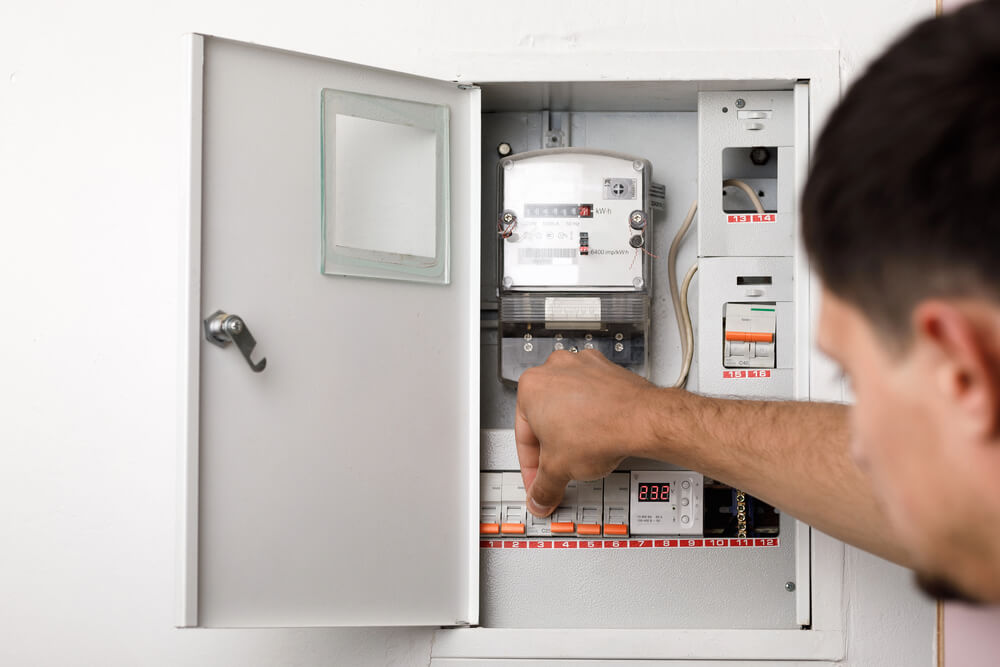
If you’re seeing any signs that your breaker is going bad, you may want to do some basic testing before calling for help.
Use a Multimeter
A multimeter can help test whether a breaker is passing power correctly, but this type of testing should only be done by someone who knows how to work safely around live electrical components.
Set the multimeter to measure AC voltage and test the terminals on the breaker. If the breaker is functioning properly, you should see a reading consistent with your home’s voltage (typically around 120V for a single-pole breaker, or 240V for a double-pole). A reading significantly lower than expected, or no reading at all, suggests the breaker isn’t passing power correctly.
Test Voltage Output
With the multimeter, check both the input side (where power comes into the breaker) and the output side (where power goes out to the circuit). If you’re getting normal input voltage but little to no output, the breaker is failing to conduct power properly. This points directly to a bad breaker rather than a problem elsewhere in the circuit.
Call an Electrician
Electrical panels carry dangerous voltages, and making a mistake with them can be life-threatening. If you’re not comfortable testing live electrical components, you should get professional help with bad breakers. A licensed electrician can quickly diagnose the issue, replace the breaker safely, and check for any underlying wiring problems that may have contributed to the failure.
Need Help Diagnosing a Bad Breaker? Call All Aboard
If you think you have a problem with your circuit breaker, don’t wait for the problem to get worse. A bad breaker is more than an inconvenience; it’s a potential safety hazard that deserves prompt attention.
At All Aboard Services, our licensed and safety-trained electricians can help you tell whether your breaker is bad and fix other electrical issues quickly and safely. Whether you need a single breaker replaced, a panel inspection, or help with a larger electrical repair, we bring decades of electrical experience to every job.
Contact our Northern Utah electricians today to schedule a free quote and make sure your electrical panel is safe and working properly.