

How To Prevent Pinhole Leaks in Copper Pipes
A copper pipe can look perfect on the outside while corrosion chews a hole through it from the inside.
Key Takeaways
- Pinhole leaks start as pitting corrosion inside the pipe wall, usually driven by water chemistry, high pressure or fast-moving water.
- Keeping household water pressure between 40 and 60 psi and treating water that’s too acidic or too mineral-heavy lowers the odds of new leaks forming.
- When one section of copper springs several leaks in a short time, replacing that run is more practical than patching it again.
- A licensed plumber can test your water, pressure and pipe condition to find the cause behind a leak instead of only sealing the hole.
A pinhole leak is exactly what it sounds like: a tiny opening in a copper pipe, often no bigger than the tip of a needle. The hole doesn’t come from outside damage. It forms as corrosion eats through the pipe wall from the inside out, sometimes over years.
That slow drip can soak drywall, warp flooring and feed mold long before you spot a stain on the ceiling. Knowing how to prevent pinhole leaks in copper pipes gives you a chance of catching the conditions that cause them while repairs are still small.
What Causes Pinhole Leaks in Copper Plumbing?
Copper holds up well for decades, but it isn’t immune to its own water supply. Understanding what causes pinhole leaks in copper plumbing helps explain why some homes lose a pipe after 20 years while your neighbor’s lasts 50.
The usual culprits include:
- Acidic or unbalanced water that strips the protective film lining the pipe.
- Water pressure above 80 psi, which stresses joints and thin spots.
- Water moving too fast, which scours the inside of elbows and tight bends.
- Sediment, sand or mineral scale that traps moisture against one spot.
- Leftover flux or debris from the original installation.
- Stray electrical current traveling through the pipe, often from a grounding problem.
Once a pit forms, water works on that single spot until it breaks through.
How Do You Prevent Pinhole Leaks in Copper Pipes?
You can’t change the copper already in your walls, but you can change the conditions running through it.
Keep Water Pressure at a Safe Level
Most homes run comfortably on water pressure between 40 and 60 psi. Anything above 80 psi pushes water harder than copper joints and fittings were built to handle.
If you’re trying to prevent pinhole leaks in copper pipes, keeping that pressure under control is a good place to start. You can check your home’s pressure with a gauge that screws onto an outdoor spigot or laundry hookup, which costs about as much as lunch.
If the pressure reading runs high, a plumber can install or adjust a pressure-reducing valve where water enters the house. Homes at the bottom of a hill or near a municipal pump station tend to see the highest readings, and pressure can climb over time as an older valve wears out.
Make Sure Your Water Isn’t Too Acidic
Water with a low pH slowly dissolves the thin protective layer inside copper pipe. Once that layer breaks down, bare metal sits exposed to whatever flows past it.
Because acidic water is one of the potential causes of pinhole leaks in copper plumbing, it’s worth checking if leaks have started appearing. Most water utilities aim for a pH between 6.5 and 8.5, but private wells and older service lines can drift outside that range.
A basic pH test kit gives you a rough number, while a plumber or a certified lab can measure pH along with copper levels in the water. Blue-green stains in a sink or tub are a strong hint that your water is already pulling metal from the pipe.
Avoid Excessively Fast Water Flow
Water that races through a pipe acts like fine sandpaper, especially at elbows, tees and any spot where the flow changes direction. Plumbers call this “erosion corrosion,” and it can contribute to pinhole leaks in copper pipes, particularly in undersized pipe or in systems with an oversized recirculation pump.
Signs worth noticing include a whistling or hissing sound when a faucet runs and leaks that keep appearing near bends rather than along straight runs. Correcting the problem usually means resizing a section of pipe or dialing back a pump, both of which are jobs for a licensed plumber.
Prevent Mineral and Sediment Buildup
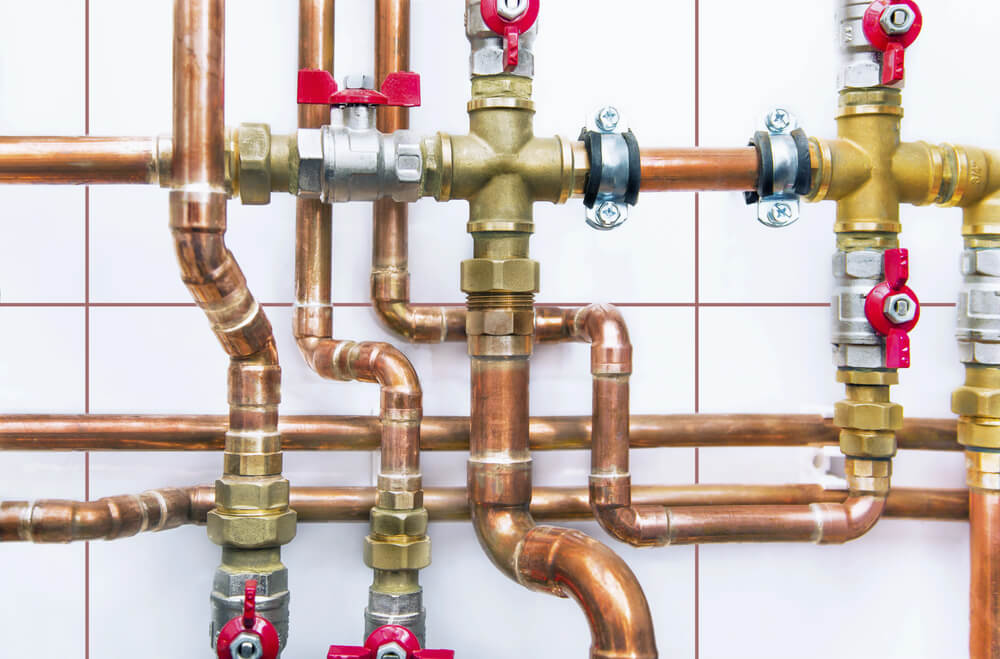
Mineral scale and grit settle inside horizontal pipe runs and hold moisture against one small area, which is how pitting gets started. Northern Utah water carries plenty of dissolved minerals, so buildup here isn’t a question of if but when.
Flushing your water heater once a year clears sediment before it circulates. A whole-home sediment filter catches sand and grit at the point of entry, and softening equipment cuts down on scale.
Because hard water is so common across the region, treating it protects your fixtures and appliances at the same time while helping reduce conditions that can damage copper plumbing.
Fix Water Chemistry Problems
Testing your water helps identify water quality issues and determine which treatment system is best suited to correct them. For example, a neutralizing filter raises pH in acidic water. A softener or conditioner handles high mineral content. Carbon filtration reduces chlorine and chloramine, which can be aggressive toward copper at higher levels.
Matching treatment equipment to your test results matters more than buying the biggest system on the shelf. Over-treating water creates its own problems, including water that’s too soft and turns corrosive in a different way.
Understanding what causes pinhole leaks in copper plumbing often comes down to identifying these specific water chemistry problems rather than treating every home the same way.
Replace Badly Corroded Copper Pipes
Sometimes a copper pipe is simply worn out. Copper that’s already pitted in several places will keep failing, and each new patch buys less time than the one before it. Repeated leaks in the same run, green crust at the joints or water that runs cloudy after sitting overnight all point that direction.
Replacing a failing section of copper, or repiping the house if the damage is widespread, ends the cycle. A plumber can inspect the exposed pipe in your basement or crawlspace and tell you whether you’re looking at one bad stretch or a system-wide issue.
Call a Licensed Plumber
Water pressure, pH, flow rate and the age of your pipe all affect one another, so guessing at which one is doing the damage tends to waste money. A licensed plumber can test all of them, then recommend the fix that addresses the cause rather than the symptom.
That makes professional diagnosis especially useful when you’re trying to prevent future pinhole leaks rather than simply patch the ones you already have.
Call sooner rather than later if you notice damp spots on drywall, a musty smell near a wall or floor, a water bill that jumps for no clear reason or a water meter that keeps moving even when you’ve shut off the fixtures.
All Aboard Services Can Help You Prevent Pinhole Leaks in Copper Pipes

All Aboard Services has worked on Northern Utah plumbing since 1978, and our licensed plumbers know how to prevent pinhole leaks in copper pipes. When you call us, you’ll get a free written estimate from a technician instead of a salesperson, along with pricing locked in for 30 days and a one-year warranty on the work.
If you’ve spotted a leak or you want your system checked before one starts, schedule leak repair in Northern Utah with All Aboard today.